Back to Projects

SenseWell

Healthcare professionals in critical care units receive a continuous stream of clinical alerts from multiple medical devices. Since many of these alerts appear similar, identifying and prioritizing truly critical patient events becomes challenging, leading to alarm fatigue, increased cognitive load and delayed responses.

Services
Health Care × SaaS Platform
Role
Product Designer (End to End)
Year
2026

{01} — Understanding the problem

Understanding the problem and framing it

In Intensive Care Units, clinicians operate under continuous cognitive strain, receiving hundreds of alerts every shift from an uncoordinated array of medical devices. Overlapping frequencies and uncalibrated thresholds lead to severe sensory desensitization.

  • Slow issue detection
  • Delayed response times
  • Customer frustration
  • Operational overload
  • Poor visibility into support performance

{02} — Product vision

The right alert, at the right intensity

To transform ICU alarm management from a noisy, reactive system into an intelligent, multisensory, human-centered care network that delivers the right alert to the right clinician at the right intensity and time helping clinical teams respond faster while reducing alarm fatigue and unnecessary noise.

SenseWell turns alarm management from constant noise into intelligent, progressive communication helping clinicians notice what matters, when it matters, without overwhelming them.

{03} — Core product philosophy

Six principles behind the system

  1. 1

    Signal over noise

    Prioritize actionable clinical events and reduce unnecessary disruption.

  2. 2

    Progressive escalation

    Increase alert intensity and reach only when the previous level is not acknowledged.

  3. 3

    Multisensory by design

    Combine sight, sound, touch and scent to improve the probability that a critical alert reaches the clinician.

  4. 4

    Human-centered urgency

    Make alerts noticeable without creating continuous sensory overload.

  5. 5

    Closed-loop accountability

    An alert is not resolved simply because it was sent; the system progresses toward acknowledgment and confirmed response.

  6. 6

    Designed for clinical workflows

    Integrate with existing monitoring infrastructure rather than requiring a completely new hospital ecosystem.

{04} — Competitive landscape

Managing alarms vs managing attention

Competitor research revealed that the healthcare market already has strong solutions for patient monitoring, alarm filtering, nurse communication and clinical workflow management. However, these capabilities are often distributed across separate systems and devices. SenseWell identifies an opportunity between alarm management and human attention: a dedicated multisensory wearable that progressively escalates critical alerts and closes the loop through clinician acknowledgment.

SenseWell competitive landscape positioning map

The market already owns

Detecting → Filtering → Routing → Communicating

SenseWell owns

Capturing attention → Escalating intelligently → Confirming response

Existing clinical systems are optimized to manage alarms. SenseWell is designed to manage clinician attention.

{05} — Market opportunity

Macro drivers

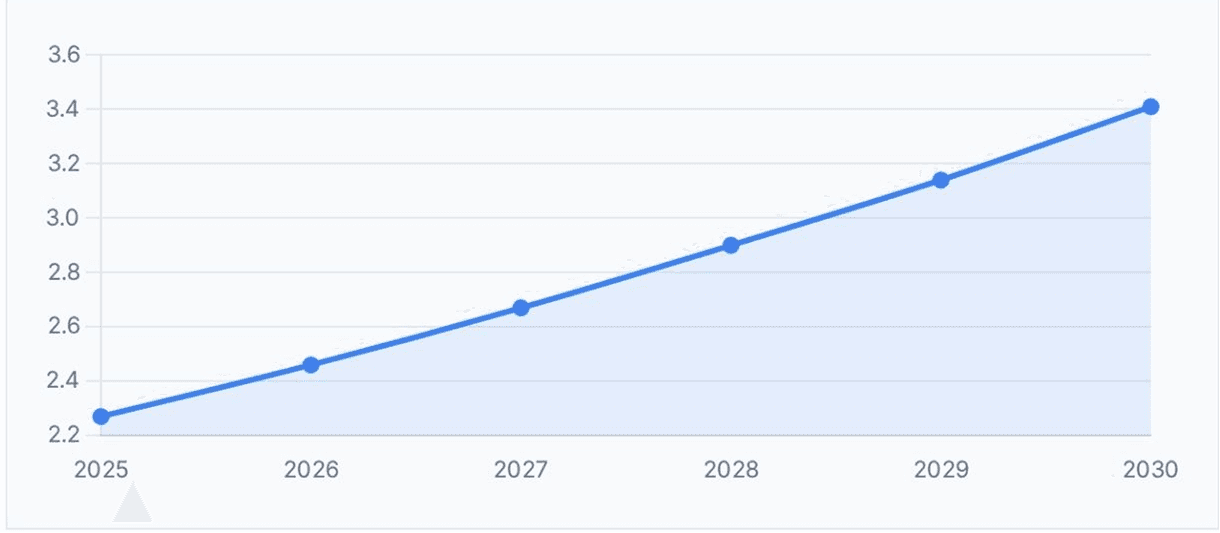
India's patient monitoring market is valued at $2.27B (2025) and projected to reach $3.41B by 2030. This growth is reinforced by structural demand pressures and commercial validation from institutional leaders.

India patient monitoring market opportunity chart

{06} — Business impact

Value beyond a new device

SenseWell can create value for hospitals by improving how critical alerts are prioritized, delivered, escalated and acknowledged.

  1. 1

    Reduce alarm fatigue

    SenseWell's progressive, multisensory alert model can reduce the need for every event to become a loud, disruptive alarm.

  2. 2

    Improve clinical response

    Tier 1 → Tier 2 → Tier 3 → Tier 4 creates a structured response pathway instead of relying on a single notification.

  3. 3

    Improve staff productivity

    Instead of requiring nurses to continuously watch monitors or dashboards, SenseWell brings relevant alerts directly to the clinician through the wearable.

  4. 4

    Closed-loop alert system

    Detection → Alert → Acknowledgment → Escalation → Response → Resolution.

  5. 5

    Reduce infrastructure replacement costs

    The proposed architecture uses an integration layer and standards such as HL7, with MQTT/WebSockets for alert distribution.

  6. 6

    Scalable product ecosystem

    SenseWell can evolve from a single wearable into a broader clinical alert-management platform.

The most important KPI opportunity

  • Alert acknowledgment time ↓
  • Missed / unacknowledged critical alerts ↓
  • Non-actionable alarm exposure ↓
  • Response consistency ↑
  • Clinician time spent monitoring alerts ↓

{07} — Tiered escalation matrix

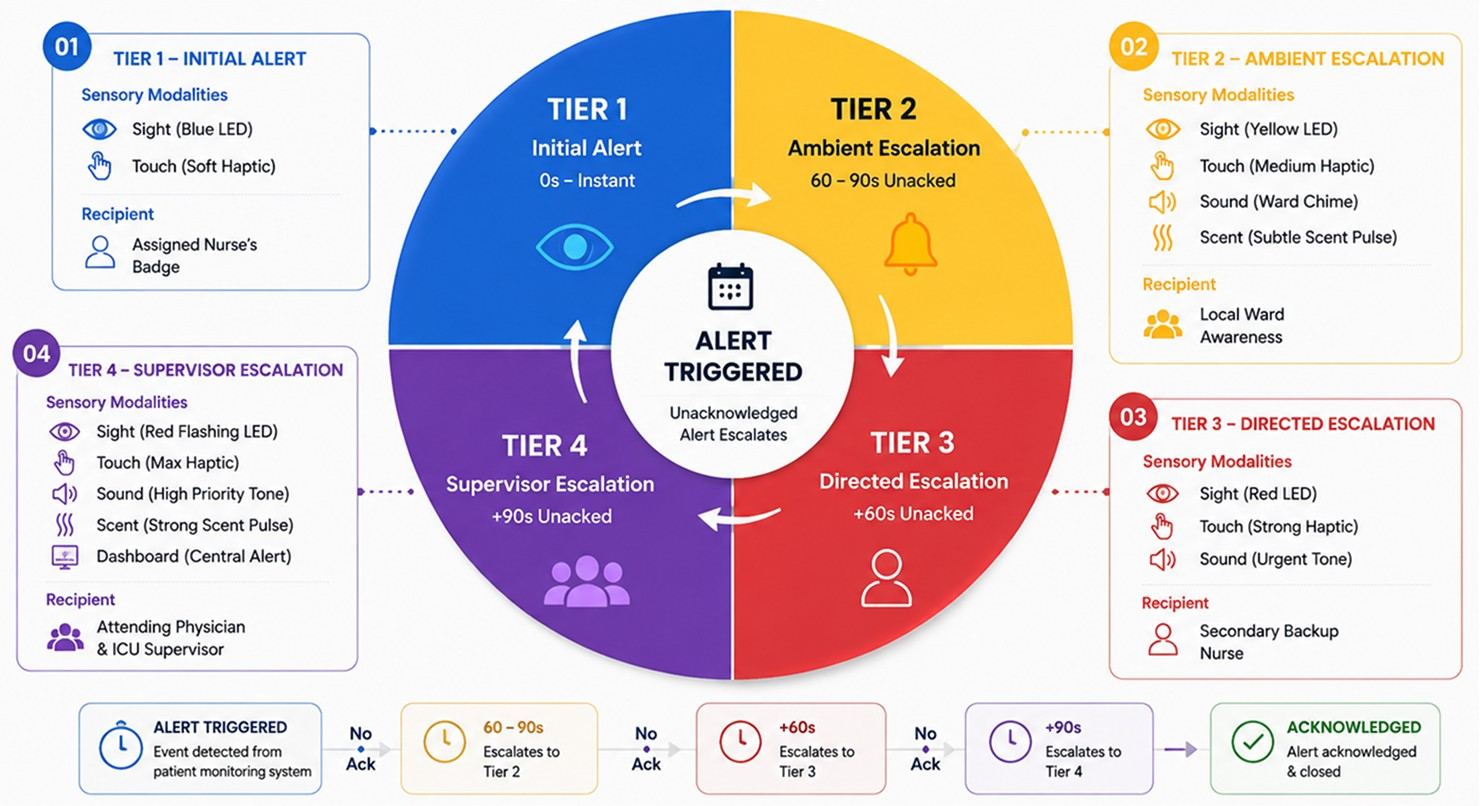
Four progressive alert tiers

Conceptual visualization of SenseWell's four progressive alert tiers. Each segment represents one escalation stage; the equal sizing is illustrative and does not represent measured alerts.

SenseWell tiered escalation matrix visualization
Tier 1

Ambient visual cue on the badge — noticeable, never disruptive.

Tier 2

Visual plus gentle haptic pulse for the assigned clinician.

Tier 3

Escalated haptic and audible alert, extended to nearby clinicians.

Tier 4

Full multisensory alert broadcast until acknowledgment is confirmed.

{08} — Wearable device

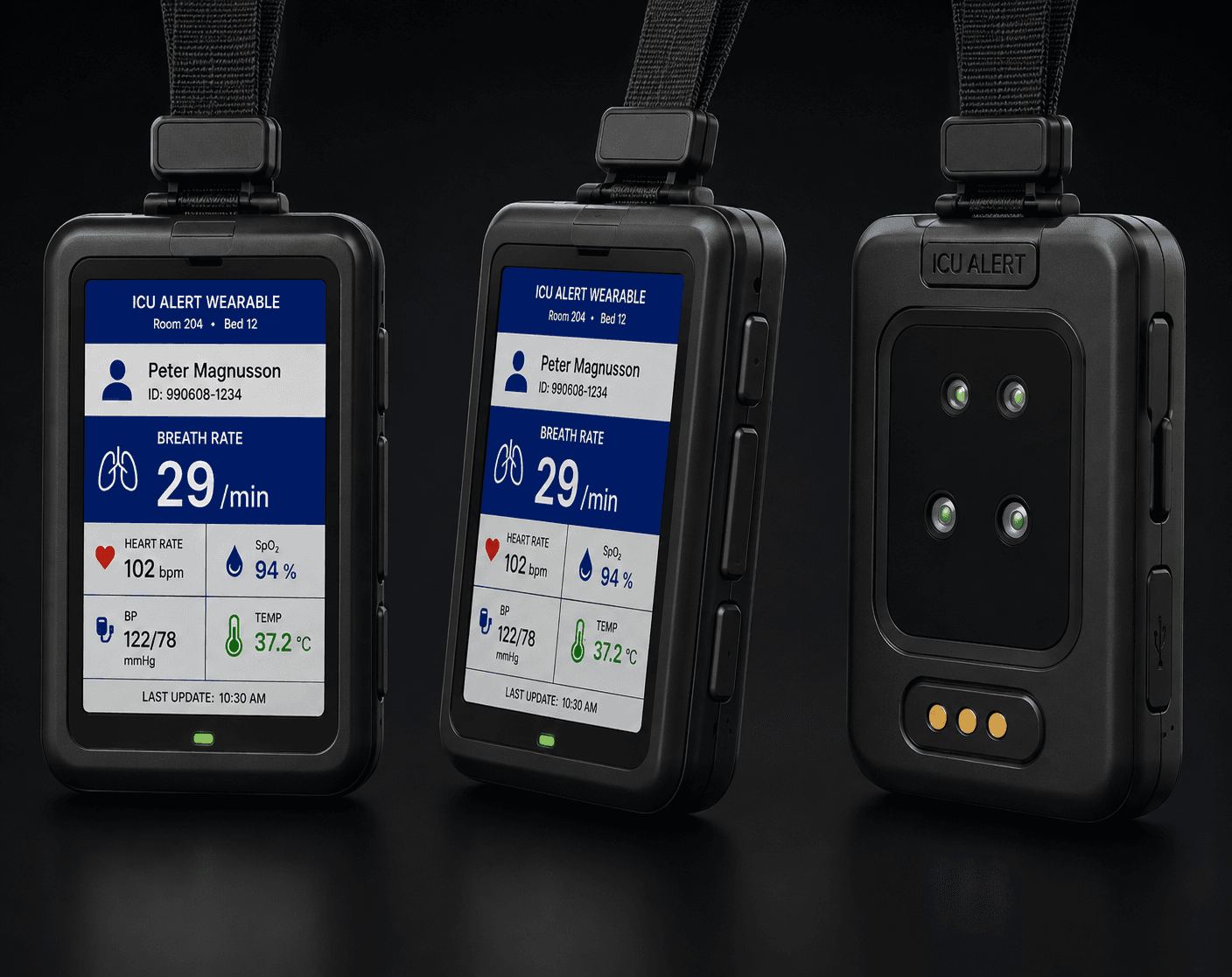
Sight, sound and touch on the badge

A wearable clinical alert device that combines sight, sound and touch to deliver progressive, tiered alerts to healthcare professionals, helping ensure critical notifications are noticed, acknowledged and escalated appropriately.

SenseWell wearable clinical alert badge concept

{09} — Technical workings

Integration and data pipeline

SenseWell does not replace the hospital's monitoring infrastructure. It adds an intelligent alert-management and multisensory delivery layer between existing clinical systems and healthcare professionals.

  1. 01

    CMS to SenseWell dashboard

    The hospital's interface engine captures vitals and alerts from the Central Monitoring System and packages them into standard HL7 messages. These are broadcast over the internal network to a secure feed, where a SenseWell listener updates the dashboard instantly upon arrival.

  2. 02

    Dashboard to nurse badges

    Once data is received, the platform determines alert tiers and recipients, then pushes alerts via realtime MQTT/WebSocket protocols over the hospital's Wi-Fi network. Alerts arrive instantly on the badge, mirroring the speed and reliability of a phone notification.

{10} — Information architecture & user flow

Mapping how nurses move through SenseWell

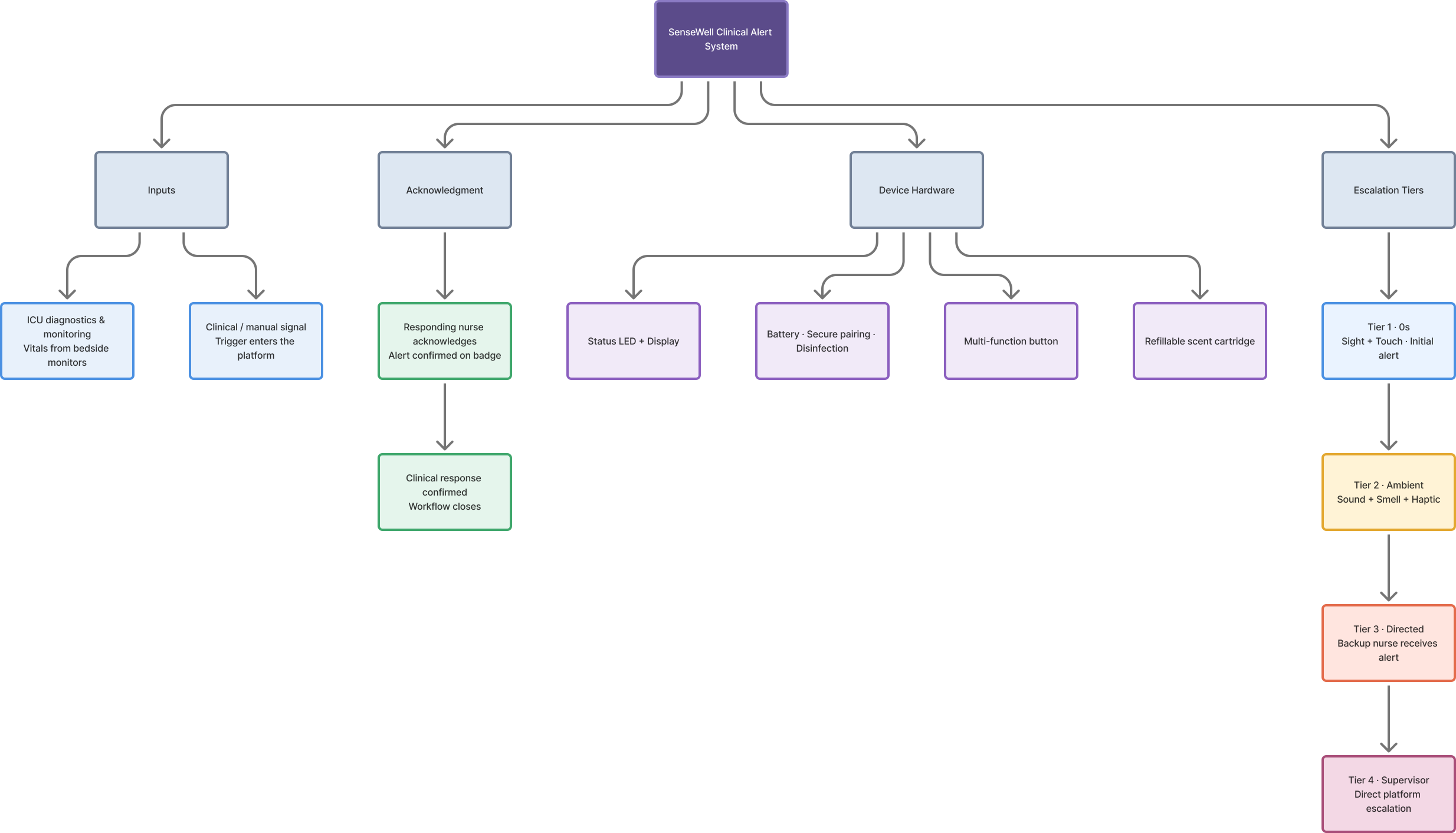
I designed the information architecture and user flow to map how nurses move through SenseWell step by step, ensuring every action feels logical, simple and aligned with their real-world workflow.

Information Architecture

SenseWell information architecture diagram

User Flow

SenseWell nurse user flow diagram

Final concept — the solution

An intelligent, multisensory ICU alert system

The solution sits between the hospital's existing monitoring infrastructure and clinicians. Instead of sending every alarm with the same intensity, SenseWell detects, prioritizes, routes and progressively escalates alerts until they are acknowledged.

{11} — Outcome

From alarm noise to confirmed response

Designed a clinical alert platform that helps teams detect issues faster, reduce manual effort, prioritize critical problems and make better operational decisions while maintaining human control and system transparency.