Back to Projects

WorkMark

In modern organizations, employees work across multiple tools, teams and timelines but much of their real effort remains invisible. Performance is often judged by memory, visibility and self-reporting rather than evidence.

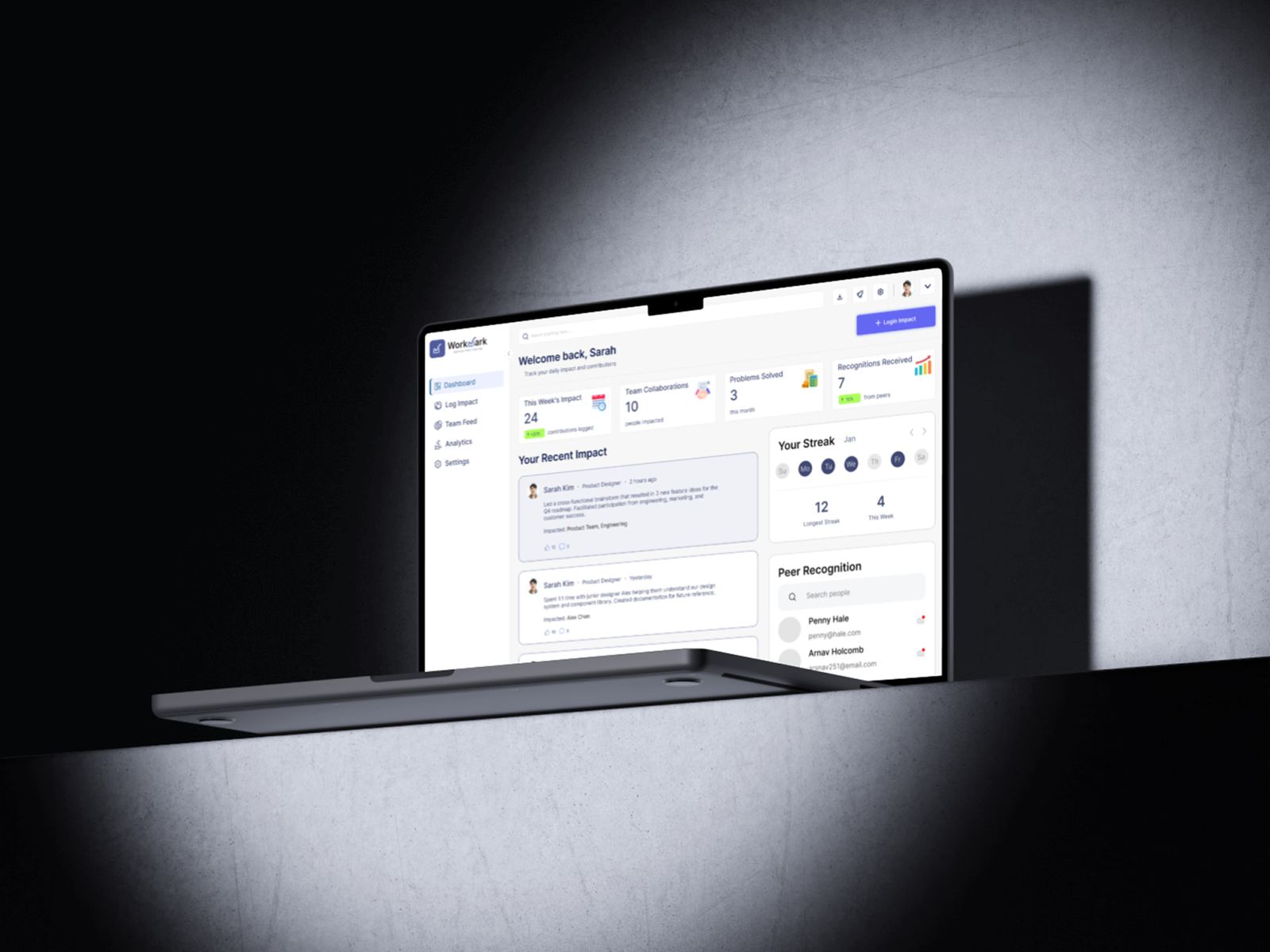
WorkMark reimagines performance evaluation by transforming everyday work into structured evidence and a single, transparent performance story for both employees and managers.

Services
HR Tech × Enterprise Productivity × AI
Role
Product Designer Research to UI
Year
2026
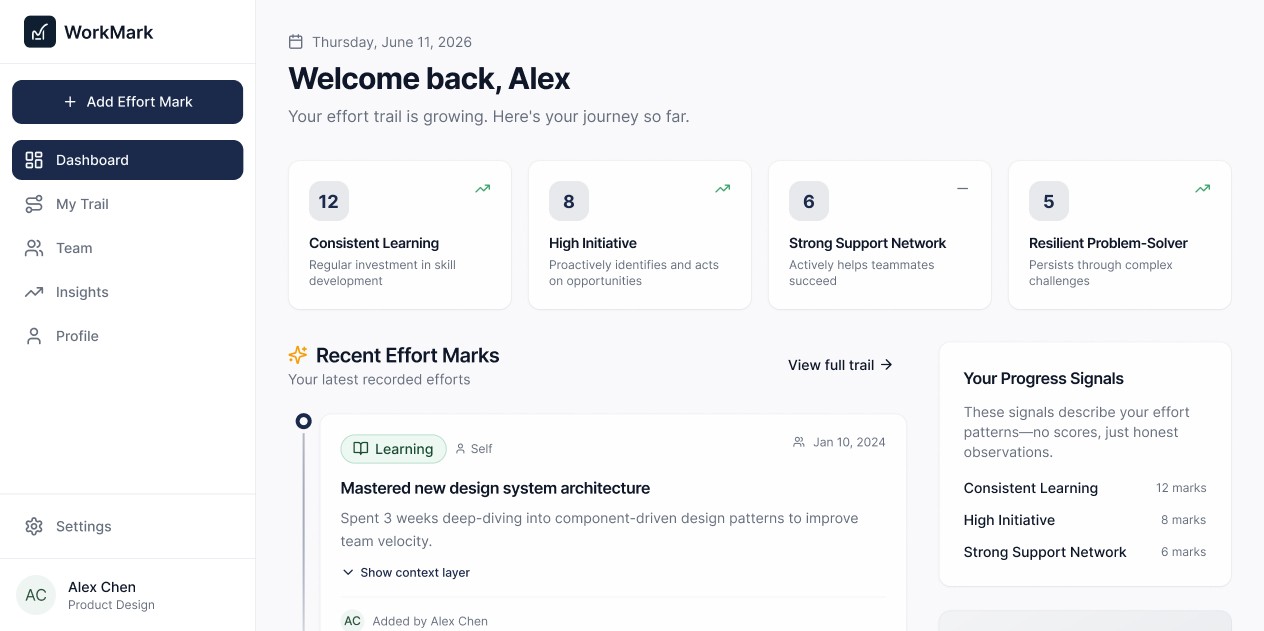
WorkMark performance intelligence dashboard concept

{01} — Understanding the problem

Understanding the problem and framing it

Organizations rely on structured performance reviews to drive compensation, promotions and retention decisions. Yet everyday contributions stay fragmented across collaboration tools, leaving decision-makers dependent on narrative memory rather than structured evidence.

Instead of immediately redesigning the interface, I adopted a hypothesis-driven approach to validate the root causes behind governance and workflow breakdowns. This kept research focused, testable and aligned with measurable business outcomes.

If contribution signals from distributed tools are passively aggregated and structured into contextual summaries, then performance evaluation efficiency and calibration fairness will improve without increasing governance risk.
Scope

A minimal performance intelligence system that captures everyday work and translates it into a single, transparent performance health score starting with the employee experience, with manager and org layers as future scope.

Target audience

Companies with 50–500 employees operating in the chaos zone too large for informal recognition, too small for enterprise HR systems.

Why mid-scale?

Mid-scale companies face the highest performance ambiguity too large for intuition, too small for advanced systems.

{02} — User research

Tools exist → they fail → so we studied real users

Is the problem real?

Who feels it the most?

How severe is it?

Where exactly does it occur?

Existing tools answer “What was done?”

WorkMark answers “What actually mattered?” it creates evidence, not just data.

{03} — Competitor research

Why existing tools fail

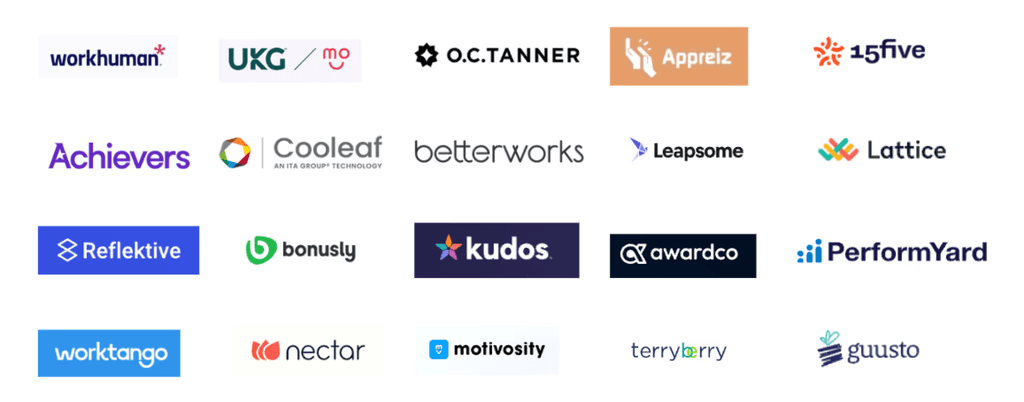
Organizations already use multiple tools to manage work, performance and recognition but these tools operate in isolation and never capture the full picture of employee contributions.

  • They operate in silos without integration.
  • They depend on manual reporting and human memory.
  • They don't reduce bias they may even amplify it.
  • They don't integrate evidence from where work happens.
  • They don't provide continuous, real-time insights.
Competitive landscape of performance and recognition tools

{04} — Quantitative

Surveys and data analysis

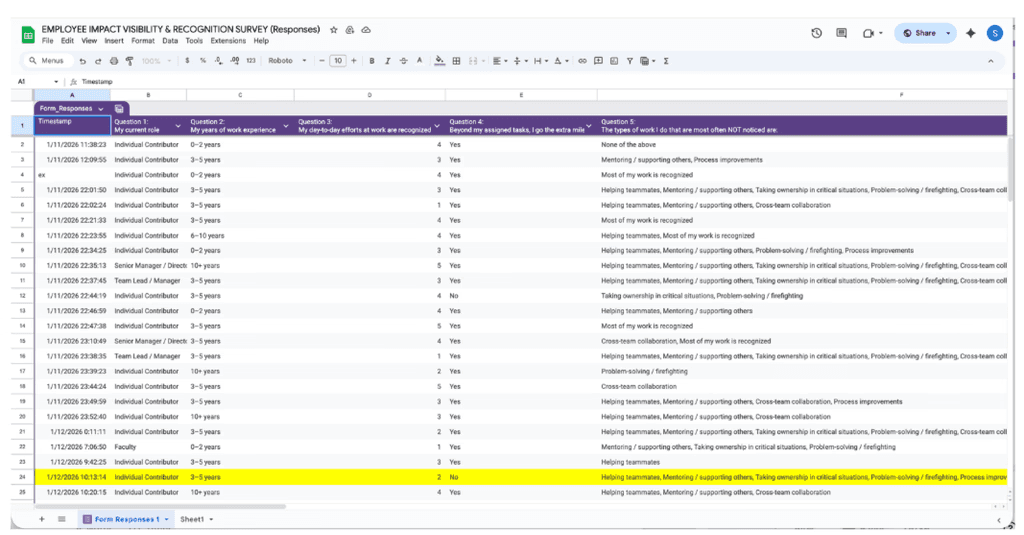
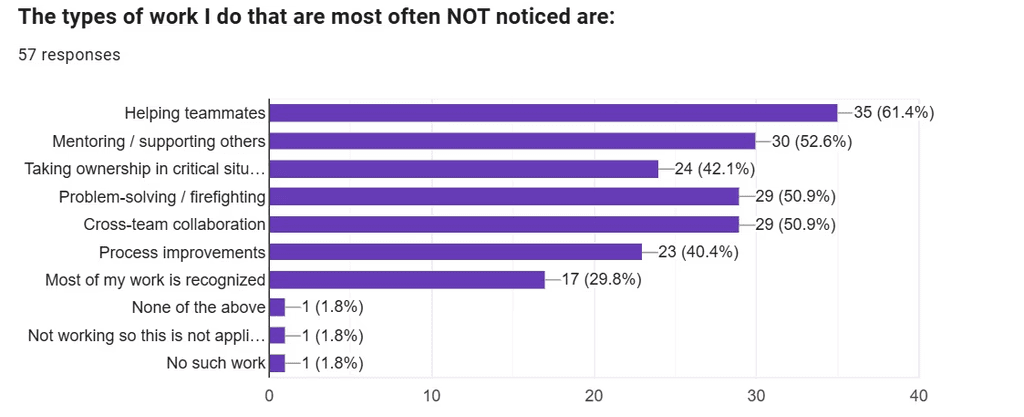
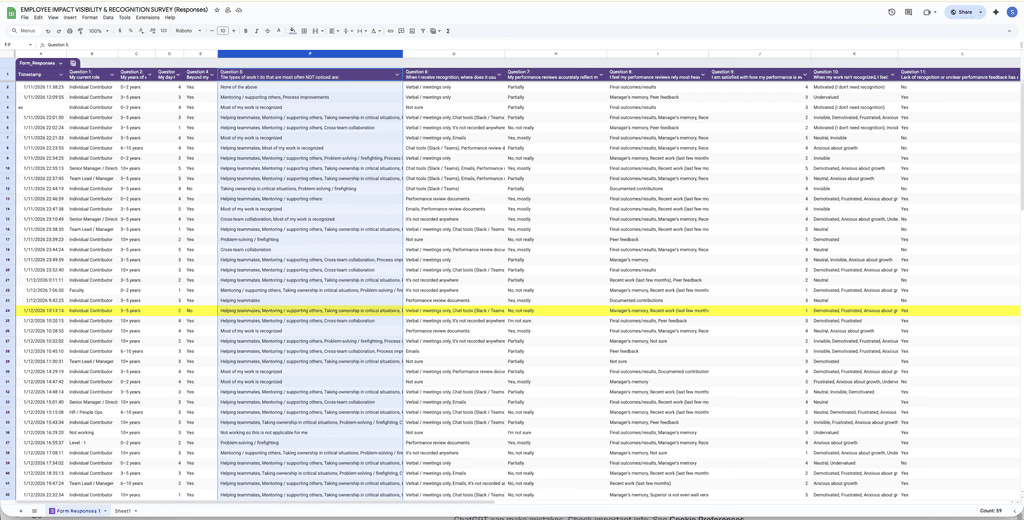
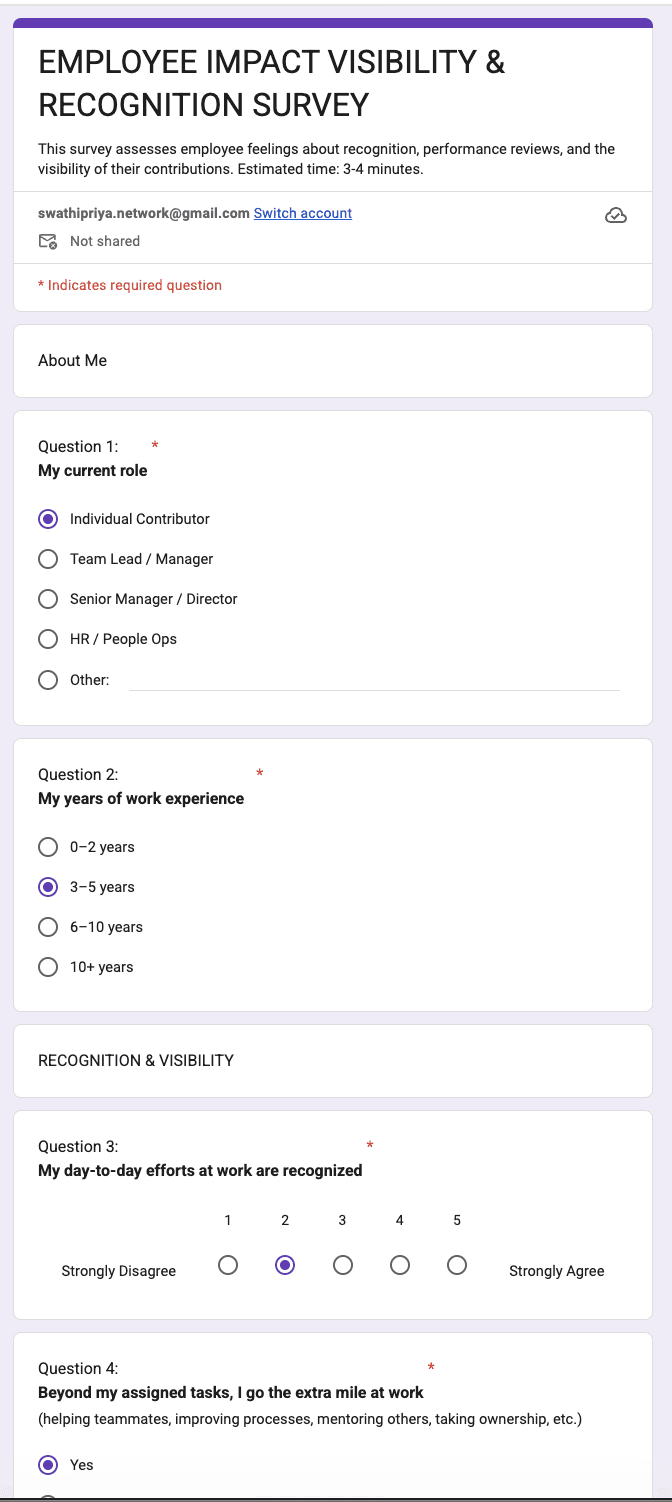
Surveys quantified how visibility, recognition and evaluation actually function in mid-scale organizations, revealing significant gaps between real work and recorded performance data and the specific types of contributions that consistently go unnoticed across roles.

Survey results on performance visibility in mid-scale organizationsSurvey responses receivedSurvey analysis of contributions that go unnoticed

{05} — Qualitative

Semi-structured interviews

Interviews explored how performance is tracked, recognized and evaluated in daily work, with questions focused on visibility, recognition, stress and fairness.

Total participants
15 users
Roles
Employees, Managers, HR
Org type
Mid-scale Product / SaaS
Experience
1–18 years
Interview response sheet from qualitative research

Final concept — the solution

A performance intelligence layer

WorkMark captures everyday work from tools and manual inputs, converts it into structured evidence, and translates it into a transparent performance health score enabling fair, continuous, data-driven evaluation for employees and managers.

The final product

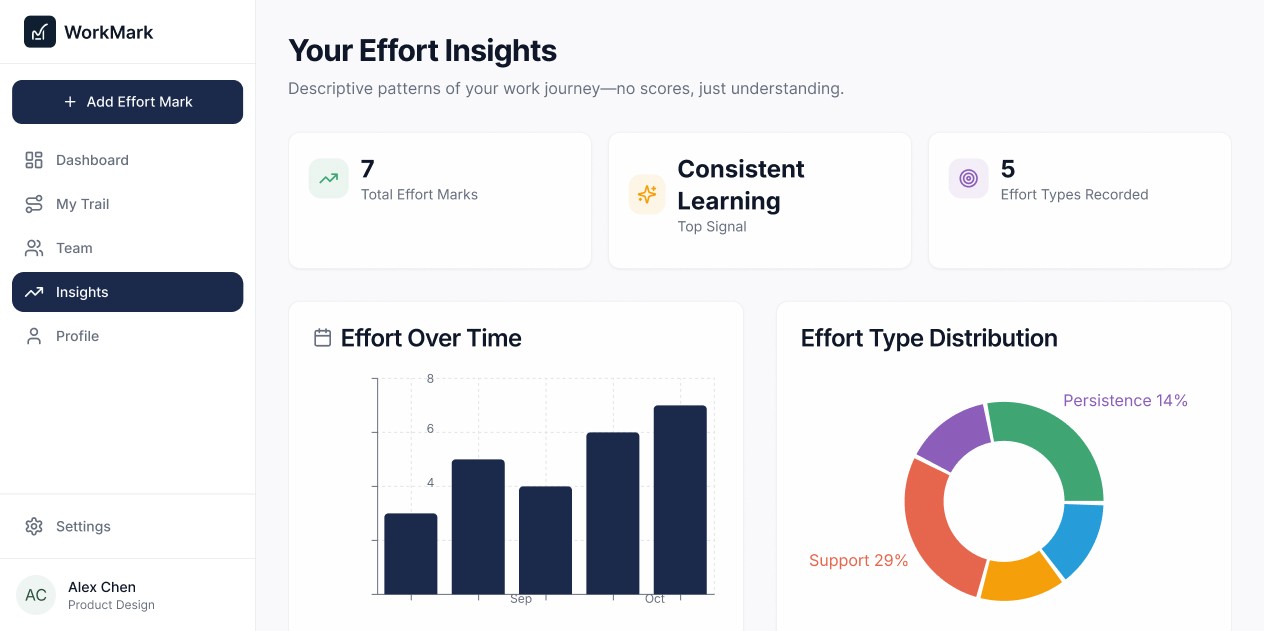
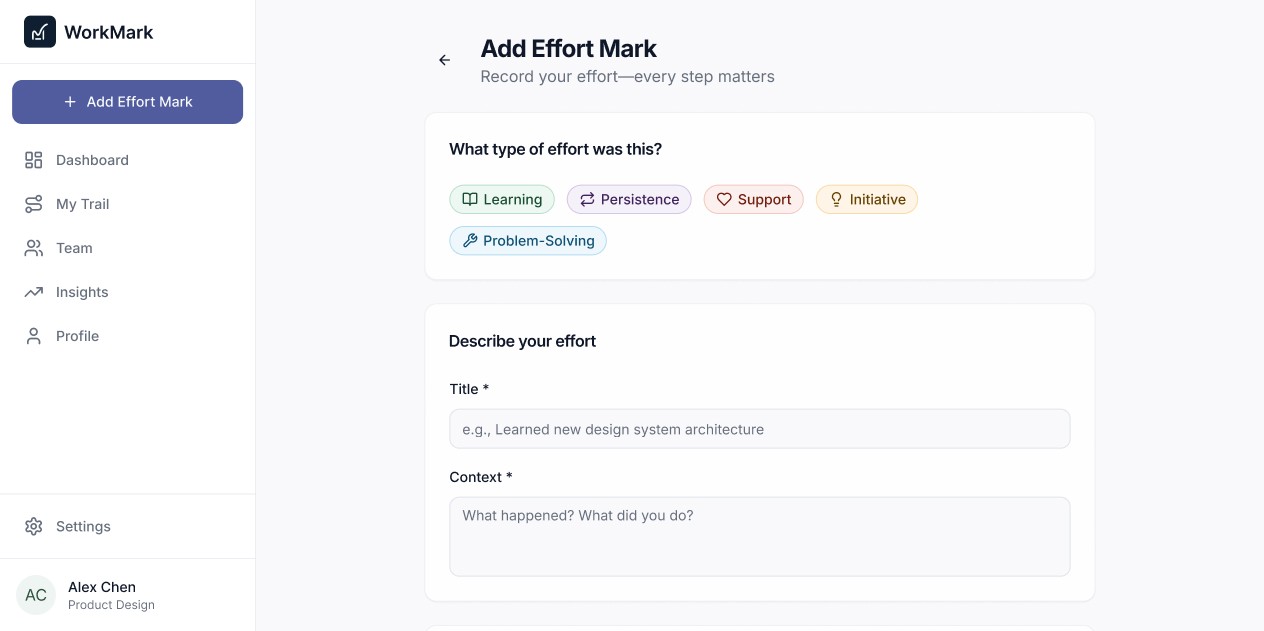
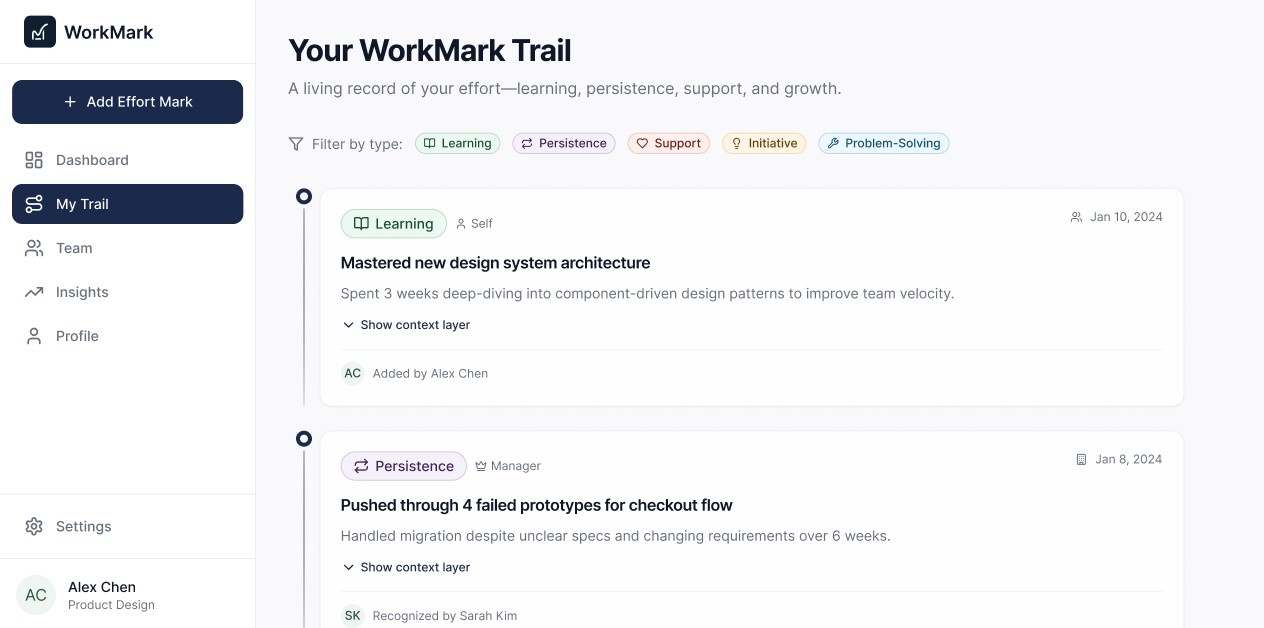
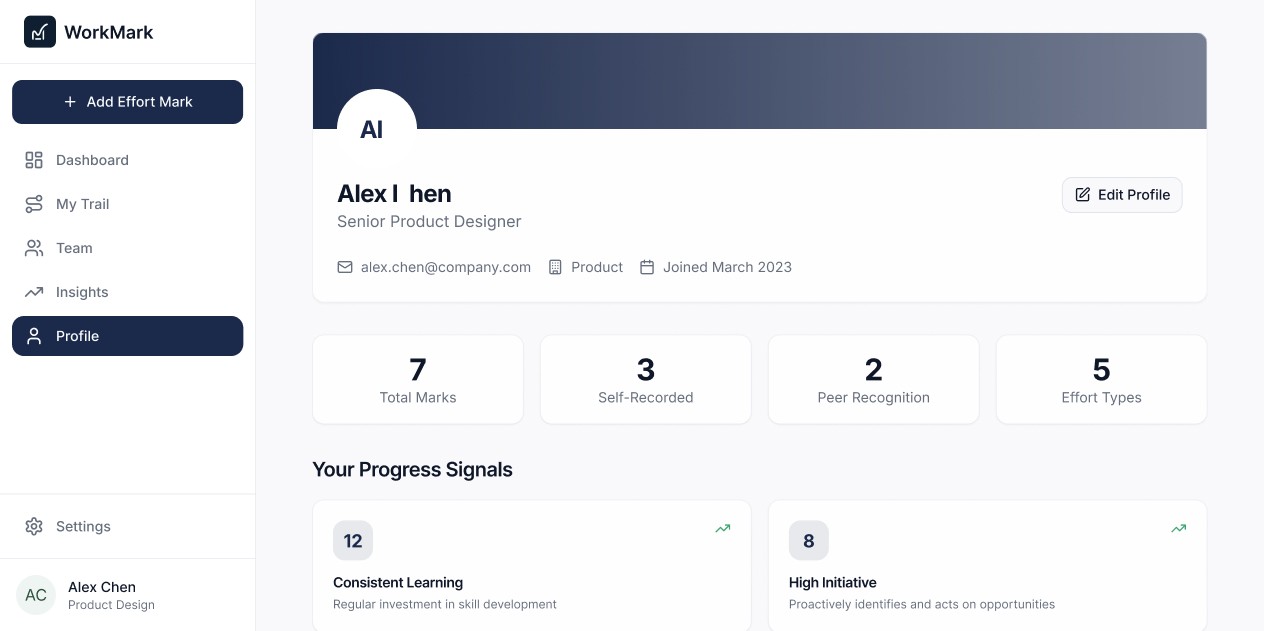
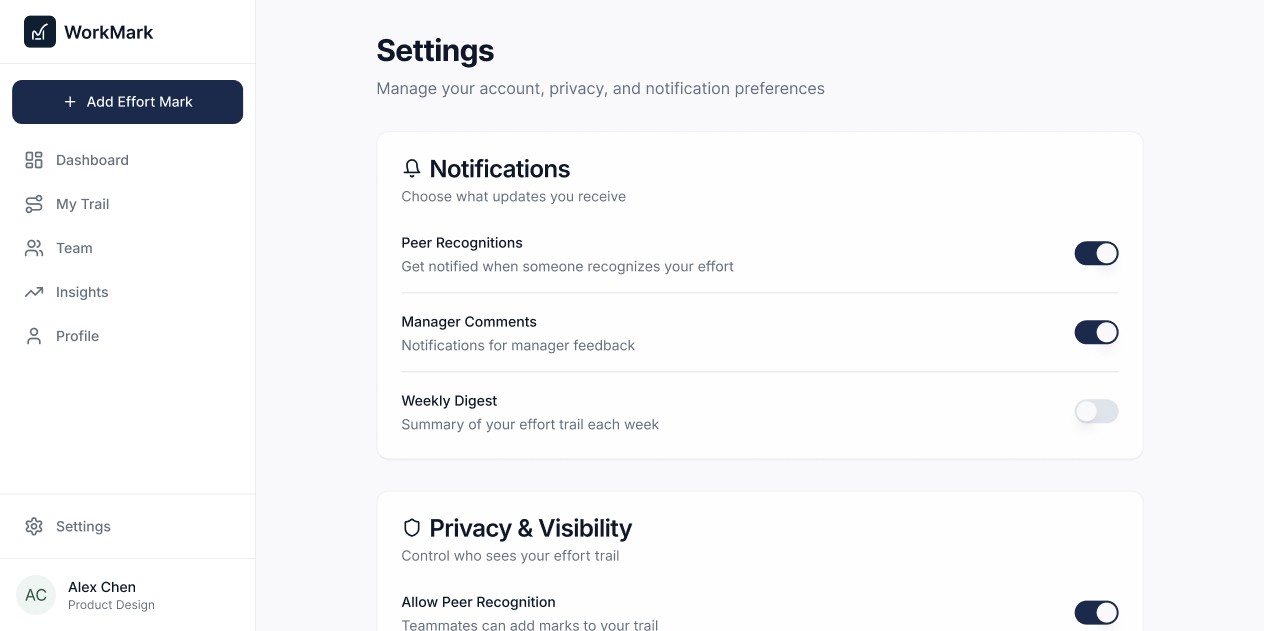
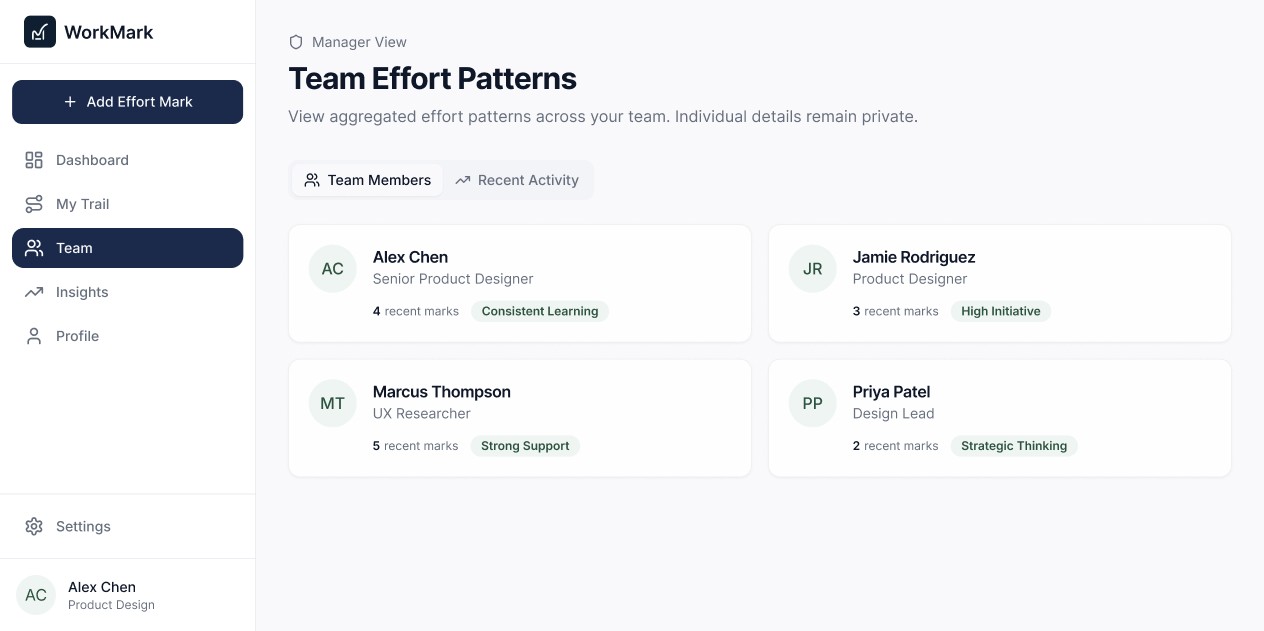
Key screens from the WorkMark experience from daily capture to evidence review and calibration.

WorkMark dashboard — performance health score overviewWorkMark daily work logging screenWorkMark contribution evidence timelineWorkMark score breakdown viewWorkMark manager team overviewWorkMark calibration and review summaryWorkMark employee weekly digest

{06} — User Flow

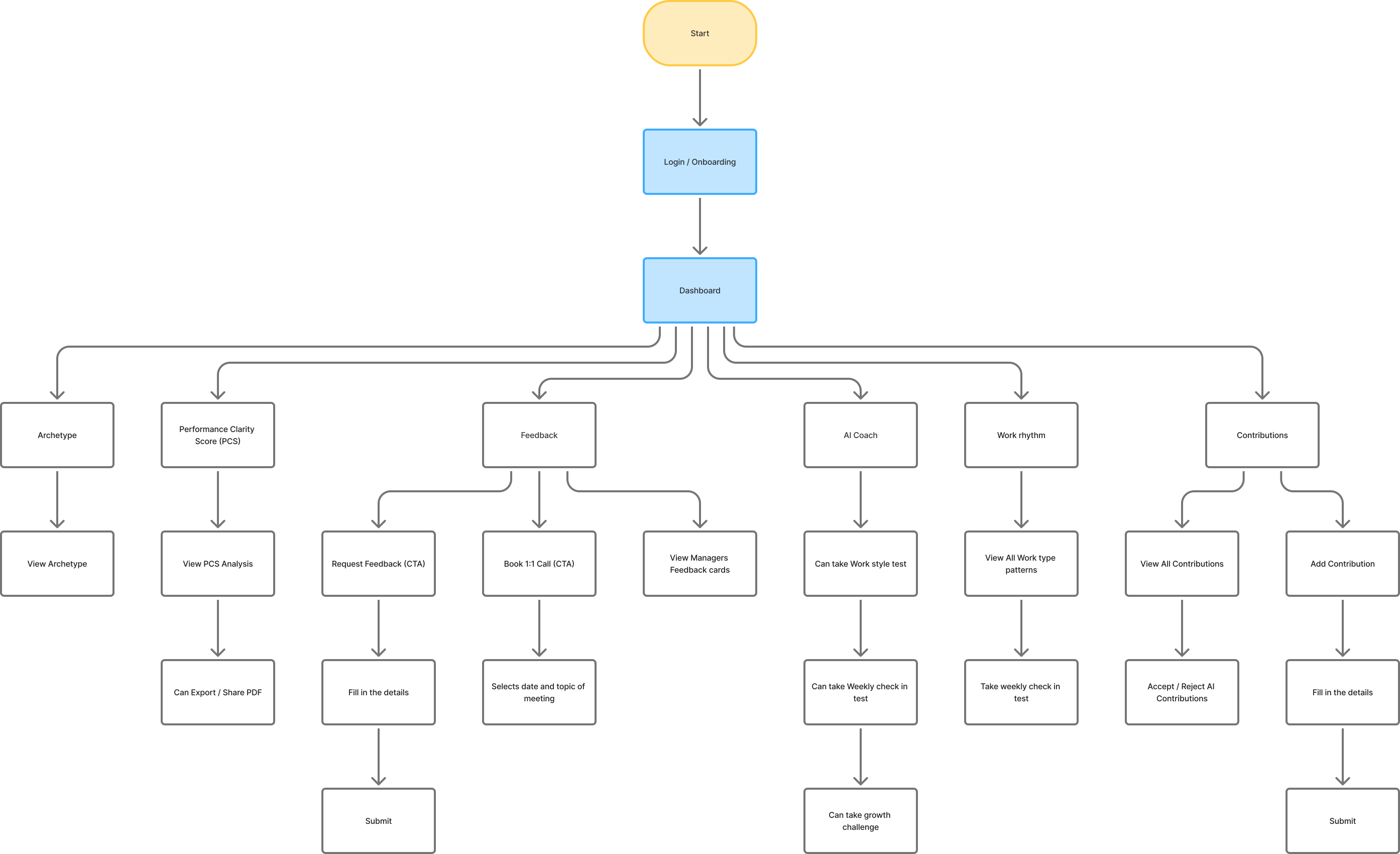
How people move through WorkMark

I mapped employee and manager journeys step by step so logging stays a 30-second habit while evaluation gains a defensible trail. Capture happens where work happens; evidence is assembled automatically; evaluation is always explainable.

WorkMark user flow diagram showing the employee and manager journeys through the product
WorkMark — User Flow overview

Employee — capture to score

  1. 01

    Sign in

    Employee lands on a focused home with today's logging prompt.

  2. 02

    Capture work

    Log a task manually or accept an auto-suggested item pulled from connected tools.

  3. 03

    Add context

    Tag impact type, effort and linked outcome so the entry becomes evidence, not a note.

  4. 04

    Review evidence

    See the week's structured contributions grouped by project and impact.

  5. 05

    Track score

    Watch the performance health score update with a transparent breakdown of what moved it.

  6. 06

    Share for review

    Export a summary that managers can read in minutes ahead of a calibration cycle.

Manager — overview to calibration

  1. 01

    Team overview

    Scan health scores and evidence density across direct reports.

  2. 02

    Drill into a member

    Open contribution timeline with sources, impact tags and gaps.

  3. 03

    Validate

    Confirm or question evidence every action is traceable.

  4. 04

    Calibrate

    Compare like-for-like contributions to reduce recency and visibility bias.

{07} — Information Architecture

Three layers: capture, evidence, evaluation

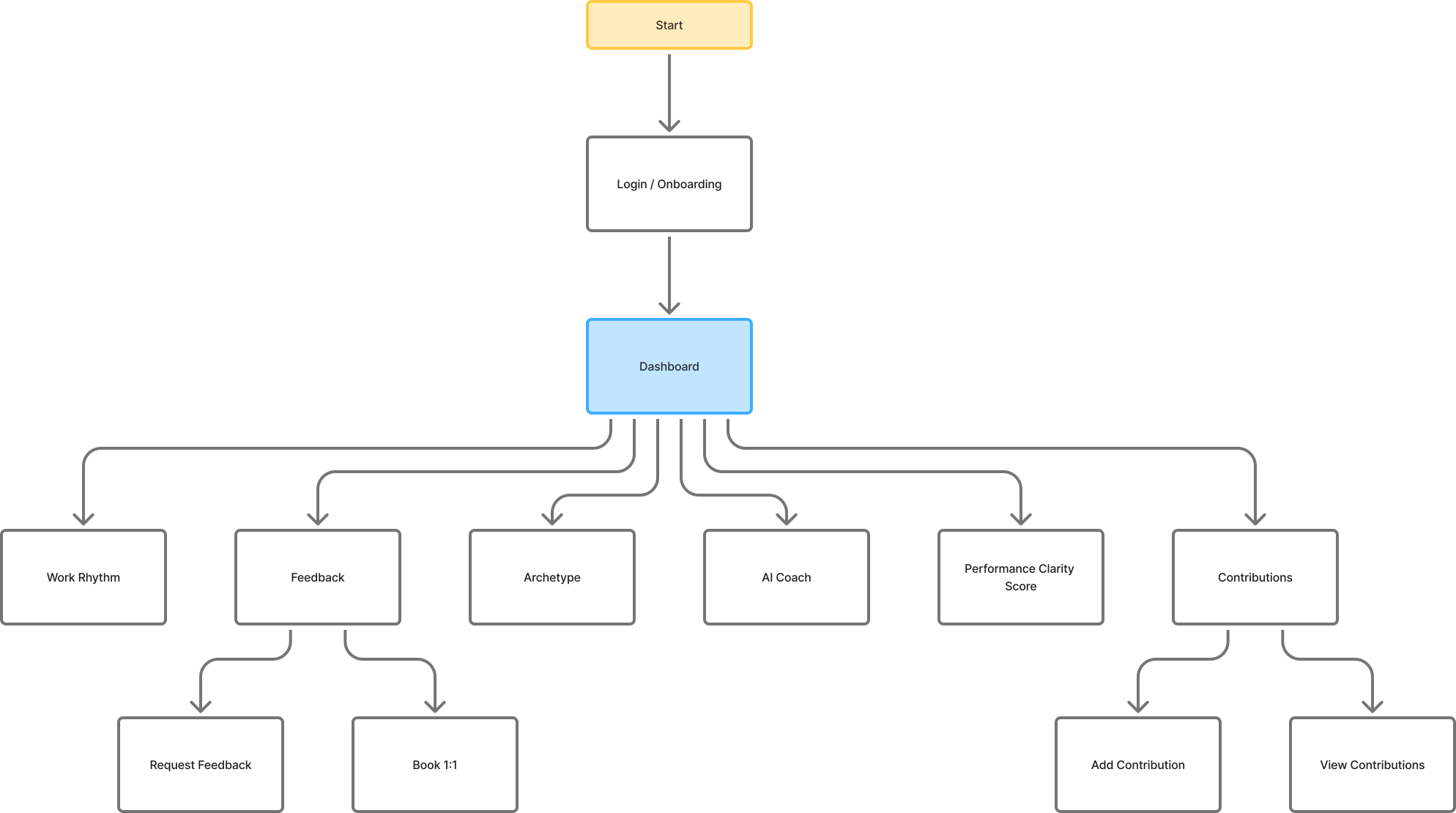
The structure deliberately separates the act of logging from the act of judging. Daily capture stays lightweight, evidence accumulates passively, and evaluation reads only from structured evidence never from memory.

WorkMark information architecture diagram showing the capture, evidence and evaluation layers
WorkMark — Information Architecture overview

Capture

  • Daily log
  • Auto-suggested activity
  • Impact tags
  • Integrations

Evidence

  • Contribution timeline
  • Project grouping
  • Source trail
  • Weekly digest

Evaluation

  • Performance health score
  • Score breakdown
  • Review summary
  • Calibration view

Account

  • Profile & role
  • Notifications
  • Privacy & data controls

{08} — Outcome

From memory to evidence

WorkMark reframed performance from subjective, memory-based evaluation to evidence-driven visibility, making everyday contributions measurable and fair.

The project demonstrated how AI and design can transform invisible work into meaningful, explainable performance insights for employees and managers.